
When most people think about the California Gold Rush, famous names such as Sutter’s Mill, Coloma, Nevada City, and the Mother Lode often come to mind. Yet the rush for gold reached much farther south than many visitors realize. Across the foothills of present-day Madera County, prospectors followed creeks, searched exposed rock, opened quartz mines, and established settlements that sometimes grew almost as quickly as they disappeared.
Today, communities such as Coarsegold remain on the map, while places such as Grub Gulch survive largely through historic records, roadside markers, cemeteries, mining remains, and stories passed down through generations.
These settlements were part of the southern edge of California’s great mining frontier. Some began as temporary clusters of tents surrounding promising diggings. Others developed stores, hotels, saloons, schools, post offices, stage stops, and permanent homes. As mining declined, some communities found new purposes through ranching, lumber, transportation, tourism, and agriculture. Others faded almost completely from the landscape.
The forgotten Gold Rush towns of Madera County reveal a complicated chapter in California history—one shaped not only by gold, but also by migration, transportation, business, cultural conflict, changing technology, and the difficult transition from temporary mining camp to permanent community.
Gold Brings Prospectors Into the Madera Foothills
The California Gold Rush began after James Marshall discovered gold at Sutter’s Mill in January 1848. News spread rapidly, drawing people from across the United States and around the world into California.
By the spring of 1849, one of the largest migrations in American history was underway. California State Parks notes that the state’s non-Indigenous population rose dramatically during the first years of the Gold Rush as prospectors, merchants, laborers, and settlers arrived in enormous numbers.
Although the most famous mining districts were farther north, prospectors also explored the southern Sierra Nevada foothills. Streams and mineral-bearing rock in the area that would eventually become eastern Madera County attracted miners searching for placer gold and, later, quartz deposits.
Madera County did not yet exist as a political jurisdiction. The county would not be created until 1893, when voters approved separating the area from Fresno County. Nevertheless, mining had already influenced settlement in the region for decades.
Madera County’s own historical overview recognizes the importance of the Gold Rush to its development and points to names such as Coarsegold, Finegold, and Grub Gulch as reminders of that era.
The names remain on modern maps, but the landscapes behind them tell very different stories.
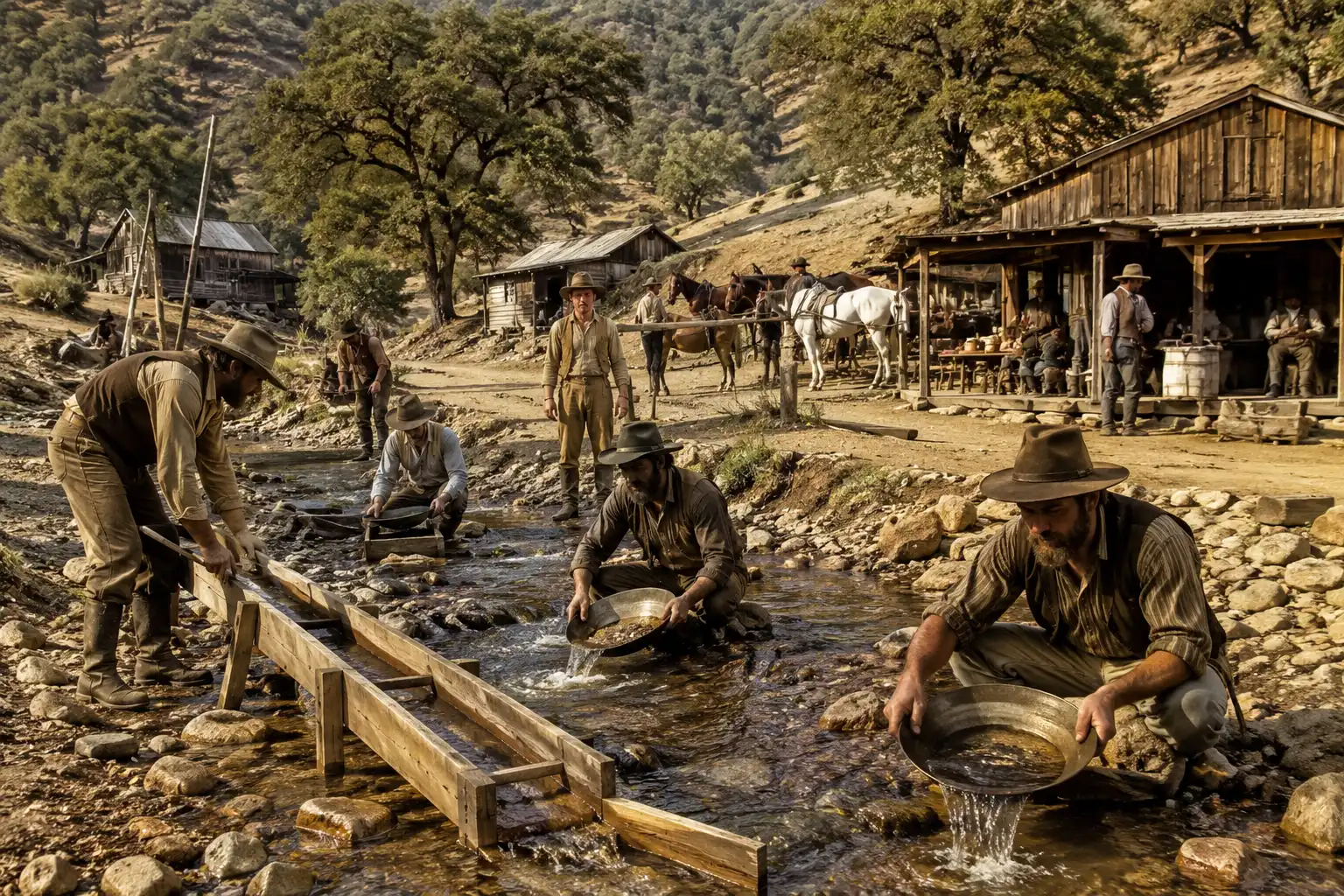
Coarsegold: The Mining Town That Survived
Among Madera County’s Gold Rush communities, Coarsegold is probably the most recognizable today.
The community’s name reflects exactly what attracted prospectors to the area: unusually coarse pieces of gold found in nearby waterways. Local historical accounts describe placer mining as an important source of prosperity during the early years of settlement.
Gold seekers began arriving around 1849 and 1850. Instead of the microscopic particles that could be difficult to recover elsewhere, miners reportedly encountered larger pieces of gold in the local creeks and gulches.
The discovery created a rapidly developing mining district.
Temporary camps gave way to stores and other businesses serving miners. Merchants quickly learned that dependable profits could often be made by supplying prospectors with food, equipment, clothing, tools, and livestock rather than searching for gold themselves.
The Coarsegold Historical Society records that local placer mines flourished from roughly 1849 into the 1860s. Quartz and other mineral mining also occurred in the surrounding district.
As easily accessible placer deposits became less productive, the character of the community began to change.
Ranching became increasingly important. Families established more permanent homes. Businesses that had originally depended heavily on miners began serving travelers, ranchers, and local residents.
Transportation also gave Coarsegold another reason to survive.
When routes connecting the San Joaquin Valley with Yosemite developed, the town occupied a useful position along the journey into the Sierra Nevada. Stage traffic and, eventually, automobile tourism helped transform a mining-era community into a lasting foothill town.
Modern Highway 41 continues through Coarsegold today, carrying residents and travelers toward Oakhurst and Yosemite National Park.
Unlike many Gold Rush settlements that disappeared after mining declined, Coarsegold successfully adapted.
Its survival offers an important lesson about California mining towns: gold might create a settlement, but communities usually needed another economic reason to remain after the richest deposits were exhausted.
Grub Gulch: From Mining Boomtown to Ghost Town
If Coarsegold represents survival, Grub Gulch represents the opposite side of the Gold Rush story.
Located in the foothills between Raymond and the Ahwahnee area, Grub Gulch became one of eastern Madera County’s best-known mining settlements.
Mining activity in the larger district stretched back to the Gold Rush period, but Grub Gulch experienced especially significant development during the late 19th century.
The opening and expansion of hard-rock mines transformed the area. Among the best-known operations was the Gambetta Mine, while historical mining records also identify mines such as the Enterprise, Josephine, Bullion, Butterfly, and others in the district.
The California Division of Mines and Geology later described the Grub Gulch district as the most productive portion of a mineralized belt extending through the Coarsegold and Fine Gold districts.
Unlike early placer mining, in which prospectors could work stream gravel with relatively simple equipment, quartz mining required more infrastructure and capital.
Workers had to extract mineral-bearing rock, move it from underground workings, crush the ore, and recover the valuable material. Stamp mills and other machinery became part of the industrial landscape.
As mining expanded, Grub Gulch developed the businesses expected of a frontier settlement.
Historical accounts describe hotels, saloons, stores, boarding accommodations, and a post office. The community also served travelers moving through the foothills.
For a period, Grub Gulch was more than a cluster of miners. It was a functioning town.
Yet its prosperity depended heavily on mining.
When mine production weakened and transportation patterns changed, the settlement had little economic foundation to replace the industry that had created it.
The early 20th century brought increasing decline. Buildings disappeared, businesses closed, and residents moved elsewhere.
A destructive fire further erased the physical town.
Today, Grub Gulch is often described as a ghost town, although that phrase can give the impression of rows of abandoned buildings still standing. In reality, relatively little remains compared with the active community that once occupied the site.
Its cemetery and historical markers are among the reminders that a substantial settlement once existed there.
Grub Gulch demonstrates how quickly a town built around one resource could vanish when that resource could no longer support it.
Finegold and the Mining Landscape Between Communities
Finegold is another name that preserves the mining heritage of eastern Madera County.
The broader Fine Gold mining district formed part of the mineralized region running through the foothills southeast of Grub Gulch and around Coarsegold.
Unlike a large incorporated town, many mining districts consisted of scattered operations rather than one dense commercial center.
This is important when trying to understand the “forgotten towns” of the Gold Rush.
Not every mining settlement looked like the stereotypical Western main street lined with saloons and hotels. Some consisted of cabins near a mine, temporary camps beside streams, processing equipment, supply structures, and small groups of workers spread over miles of mountainous terrain.
When operations ended, these smaller places could disappear even faster than established towns.
Wooden buildings decayed or burned. Equipment was removed or sold. Mine entrances collapsed or were sealed. Roads fell out of regular use. Vegetation returned.
Sometimes the place name survived even after most physical evidence of the original settlement disappeared.
Finegold is part of that landscape of memory.
The name continues to connect modern Madera County with a period when prospectors and mining companies examined nearly every promising creek, ridge, and vein across the foothills.
Fresno Flats: Where Mining Gave Way to a Permanent Community
Present-day Oakhurst was historically known as Fresno Flats.
Its story differs from that of a classic Gold Rush boomtown, but mining was still important to the surrounding region.
Settlement developed during the 19th century as pioneers established farms, stores, homes, and businesses. Gold seekers were among those drawn into the area, but Fresno Flats eventually developed a broader economic identity.
By the late 19th century, mining continued around the community. The Enterprise Mine, for example, became a significant local operation.
Yet other industries increasingly mattered.
Lumbering became particularly important, reflecting the vast forest resources of the Sierra Nevada. Ranching and agriculture also contributed to the area’s development.
Fresno Flats benefited from another powerful force: travel to Yosemite.
Road improvements brought stagecoaches, visitors, freight, and commercial activity through the foothills. Hotels, stores, blacksmiths, and other businesses served both residents and travelers.
The settlement ultimately endured because it was never completely dependent on gold.
Over time, Fresno Flats evolved into Oakhurst, today one of Madera County’s major mountain communities and an important gateway for travelers approaching Yosemite from the south.
Its transformation illustrates the way mining-era settlement could become the foundation of a modern town even after gold ceased to be the primary attraction.
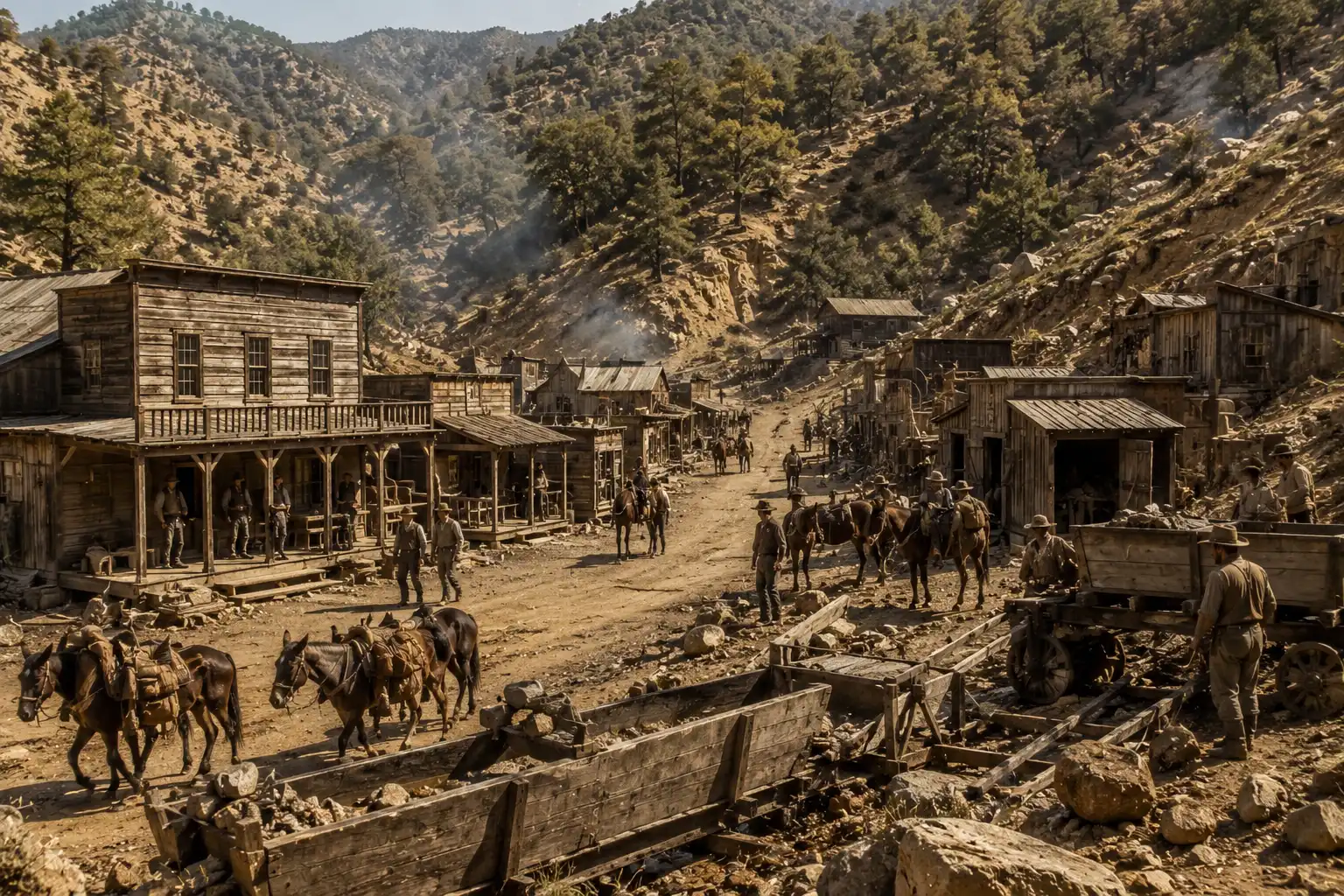
Mining Camps Were More Than Places to Dig for Gold
The words “mining camp” can create an image of prospectors living alone in crude tents.
That certainly happened during the earliest rushes, but successful camps often changed quickly.
Once miners gathered in sufficient numbers, businesses followed.
A merchant could sell shovels, boots, flour, coffee, clothing, rope, candles, and mining equipment. Blacksmiths repaired tools and shod horses. Hotels and boarding houses offered shelter. Saloons provided entertainment and social gathering places. Stage companies connected isolated settlements with larger towns.
Some camps eventually developed schools, postal services, and local government functions.
This process occurred throughout California’s mining regions.
The transformation could be remarkably fast. A promising discovery might bring hundreds of people into an isolated gulch within months. When production declined, the same population could disappear almost as quickly.
The landscape of eastern Madera County therefore became a constantly changing network of mines, camps, roads, ranches, and supply points.
Placer Mining and the Search for Easier Gold
The earliest prospectors generally searched for placer deposits.
Placer gold consists of particles or nuggets that have eroded from their original rock formations and accumulated in streambeds, gravel bars, and other deposits.
A miner with relatively simple equipment could wash gravel and separate heavier gold from lighter sediment.
The familiar gold pan became the symbol of the California Gold Rush, but miners quickly adopted more efficient equipment.
Rockers, sluice boxes, long toms, and other systems allowed larger quantities of gravel to be processed.
Water was essential.
That made creeks and rivers important not only because they might contain gold, but also because they provided the water needed to separate gold from gravel.
In dry foothill areas, limited water could severely restrict mining.
As easily worked placer deposits declined, miners increasingly searched for gold still locked inside quartz veins.
That transition changed mining from an activity that could sometimes be attempted by individuals into a more capital-intensive industry.
Quartz Mining Changes the Gold Rush Economy
Hard-rock or quartz mining required a different approach.
Instead of washing stream gravel, miners followed mineral-bearing veins underground.
Shafts and tunnels had to be excavated. Timber supported underground workings. Ore had to be transported to the surface and crushed before gold could be recovered.
Stamp mills became common in many California quartz-mining districts. Heavy stamps repeatedly crushed ore into smaller particles so that gold could be separated.
Operations such as those around Grub Gulch illustrate this later phase of California mining history.
Mining had become increasingly industrial.
Owners needed machinery, workers, transportation, investment, and reliable access to supplies.
The image of the solitary prospector remained part of Gold Rush mythology, but by the late 19th century, many productive mines looked more like industrial operations than temporary camps.
The People Behind the Mining Settlements
Mining communities attracted people from many backgrounds.
California’s Gold Rush brought migrants from the eastern United States, Latin America, Europe, China, and other parts of the world.
Chinese miners and workers became an important part of many Sierra Nevada communities. Historical accounts from the Coarsegold area document Chinese residents participating in the local mining economy.
Their experience, however, was shaped by discrimination and exclusion.
California imposed policies that targeted foreign miners, while violence and prejudice affected many immigrant communities throughout the mining regions.
The Gold Rush also had devastating consequences for California’s Indigenous peoples.
Long before prospectors entered the Sierra foothills, Native communities had lived throughout the region for generations. The sudden arrival of miners and settlers disrupted established landscapes, food resources, settlements, and cultural systems.
Conflict, disease, displacement, and discriminatory government policies produced lasting consequences.
Understanding the Gold Rush therefore requires looking beyond stories of individual fortune.
The period brought dramatic economic development, but its benefits and costs were distributed very unequally.
Why So Many Mining Settlements Disappeared
Mining towns were especially vulnerable because many existed for one primary reason.
When profitable ore disappeared, everything built around the mines was threatened.
A merchant could not operate without customers. Hotels could not survive without travelers or workers. Transportation companies changed routes when another town became more important.
Even settlements near productive mines faced challenges.
Fire was a constant threat in communities dominated by wooden construction. Water shortages affected mining and daily life. Economic downturns could halt investment. New roads and railroads could bypass formerly important stage stops.
Some places successfully reinvented themselves.
Coarsegold benefited from ranching and transportation. Fresno Flats developed around lumber, agriculture, local commerce, and Yosemite travel.
Grub Gulch did not make the same transition.
As its mining economy declined, so did the town.
That difference explains why one Gold Rush name remains a living community while another survives primarily in historical memory.
Mining Roads Become Travel Corridors
One of the Gold Rush’s longest-lasting effects was transportation.
Miners needed roads to reach camps. Businesses needed routes for supplies. Ore and equipment had to move between mines and processing sites.
These transportation networks gradually connected mountain settlements with communities in the San Joaquin Valley.
Later, the same corridors served ranchers, lumber companies, stage passengers, and tourists.
The development of routes to Yosemite was particularly important.
Foothill towns that had originally served miners could now serve travelers heading toward one of America’s best-known landscapes.
Coarsegold and Fresno Flats both benefited from this changing pattern.
The mining frontier had helped create transportation routes that outlived the mines themselves.
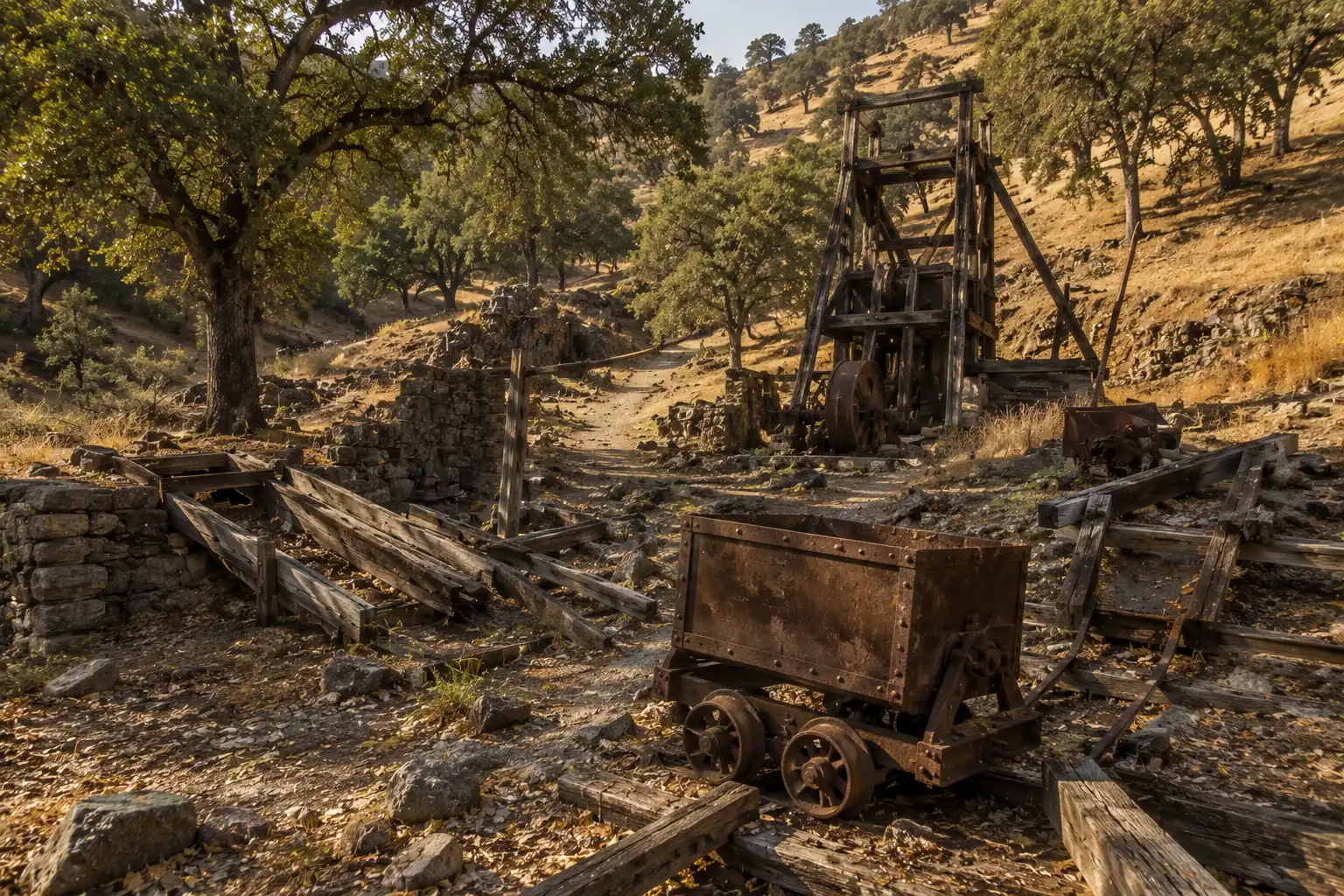
What Remains of Madera County’s Gold Rush Today?
Visitors should not expect every former mining settlement to resemble a preserved Western movie set.
Much of the physical landscape has changed.
Mining structures disappeared. Roads were relocated or paved. Businesses were replaced. Forests and vegetation reclaimed abandoned sites.
Yet Gold Rush history remains surprisingly visible.
It survives in place names.
Coarsegold immediately recalls the type of gold discovered there. Finegold preserves another direct reference to mining. Grub Gulch carries the unmistakable language of a frontier camp.
Historic cemeteries preserve the names of residents who lived in communities that no longer exist.
Local museums, historical societies, photographs, newspapers, mining reports, maps, and archival documents provide additional evidence.
The geological landscape also remains.
Creeks, ridges, quartz veins, and foothill terrain that attracted prospectors during the 19th century still define eastern Madera County.
Visiting Historic Mining Areas Responsibly
Exploring Gold Rush history can be rewarding, but former mining areas require caution.
Old mine workings may be unstable, hidden by vegetation, flooded, or located on private property. Abandoned shafts and tunnels should never be entered without proper authorization and professional safety measures.
Historic artifacts should also be left where they are when protected by law or located on public historical sites.
The safest way to explore the region’s mining heritage is through established historical museums, public roads, marked historic sites, archives, and local historical organizations.
Visitors can also learn about California’s broader Gold Rush story through resources maintained by California State Parks.
The Gold Rush Legacy in Modern Madera County
Madera County today is far more closely associated with agriculture, mountain recreation, residential communities, and routes to Yosemite than with commercial gold mining.
Yet the Gold Rush helped establish patterns that influenced the county long afterward.
Mining brought new residents into the foothills.
It encouraged road development.
It created early commercial centers.
It connected isolated mountain districts with supply communities in the valley.
It contributed to the growth of ranching, lumbering, transportation, and other industries that survived after the mines declined.
Most importantly, it left communities with different outcomes.
Coarsegold adapted and survived.
Fresno Flats evolved into modern Oakhurst.
Grub Gulch largely disappeared.
Smaller camps disappeared so completely that only maps, reports, place names, and scattered traces preserve their existence.
Together, those stories reveal that the Gold Rush was not one event with one conclusion.
It was a process that reshaped communities over decades.
Remembering Madera County’s Forgotten Mining Settlements
The forgotten Gold Rush towns of Madera County occupy an unusual space between history and landscape.
Some remain living communities whose modern residents drive roads originally shaped by mining-era travel.
Others have become ghost towns.
Still others have vanished almost entirely.
Their stories remind us that California’s Gold Rush was larger than the famous mining districts preserved in textbooks and state parks.
The southern Sierra foothills experienced their own cycles of discovery, migration, investment, settlement, decline, and reinvention.
Places such as Coarsegold, Grub Gulch, Finegold, and Fresno Flats help tell that story.
Gold brought people into these hills, but the communities that lasted were usually those able to become something more than mining camps.
Today, exploring their history provides a closer look at how eastern Madera County developed and how the search for mineral wealth helped shape roads, businesses, settlements, and communities that still influence the region.
Their mines may be silent, and many of their buildings may be gone, but their names continue to mark the map.
For anyone interested in Madera County history, those names are an invitation to look deeper.